When P&ID Drawings Can't Be Trusted — Establishing Verified Records Before Shutdown Planning Begins
Client: Multinational Beverage Company
Industry: Industrial
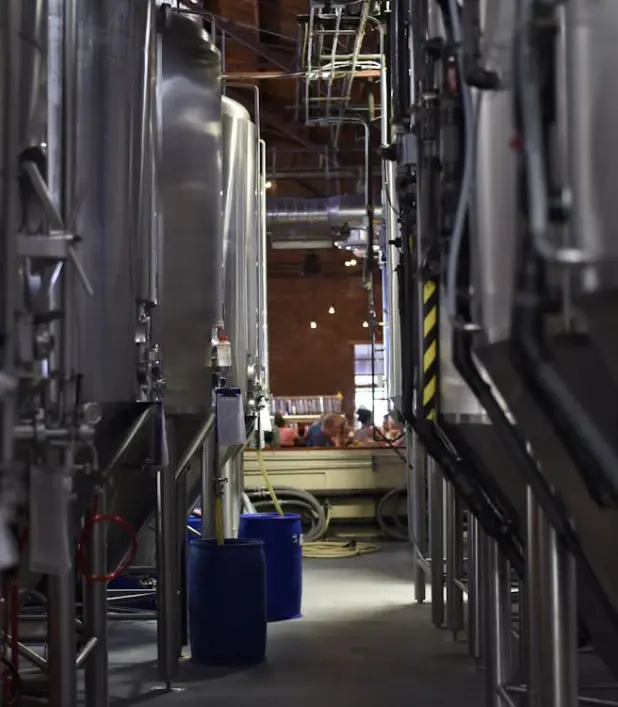
Location:Multiple Scottish Facilities
Our Experience
The Situation
Process plant drawings are meant to reflect what exists.
In practice, across facilities that have been operating and evolving for years, they often don’t. Modifications are made. Maintenance work introduces changes. New assets are installed without tags being fitted. Updates are captured inconsistently — or not at all. Over time the gap between what the drawing shows and what the plant actually contains widens quietly, until it matters.It matters when a shutdown is being planned and the drawings are the basis for every decision that follows. It matters when maintenance teams need to locate and identify assets quickly and accurately. It matters when regulatory requirements demand that records reflect physical reality.
Phase has carried out P&ID linewalk and as-built verification programmes across 24 process plant facilities for a single multinational client — establishing verified, updated records that can be relied upon for ongoing maintenance, shutdown planning, and regulatory compliance. Phase’s role extends beyond the initial linewalk — supporting ongoing record maintenance as modifications and installations are made, ensuring the as-built record stays current between shutdowns rather than drifting from reality over time.
What Phase Established
Phase surveyors — experienced in both survey and process plant inspection — physically walked each facility line by line, checking every pipe, valve, instrument, and fitting against the existing P&ID drawings. Every discrepancy was noted. Every missing tag was identified and cross-referenced against the client’s SAP asset management system before drawings were updated.
New assets recently installed but not yet tagged were flagged and reported. Older equipment without tags was identified, marked on drawings, and included in Excel schedules provided to the client for action. On return to office, AutoCAD drawings were updated to reflect verified physical conditions and revised to as-built standard — using an intelligent drawing system with attributes exportable to SAP.
Colour-coded markup was applied throughout — making it immediately clear to anyone using the drawings which items had been verified, which had been updated, and which required further action.
The Consequence Addressed
A shutdown planned around inaccurate P&IDs risks discovering conflicts during the shutdown itself — when options are limited, time is expensive, and every day of delay carries real cost. Maintenance teams working from drawings that don’t reflect physical reality introduce risk into every task. Regulatory requirements that demand accurate records cannot be met from drawings that have drifted from the plant.
Phase established the verified as-built record that removed those risks — across 24 facilities, repeatedly, to a consistent standard. And by supporting ongoing record maintenance between shutdowns, Phase ensures the drawings never drift far from physical reality again.
How The Linewalk Programme Works
On Site — Line By Line
Phase surveyors attend site with printed P&ID drawings and walk the plant systematically — line by line, valve by valve, instrument by instrument. Every discrepancy between drawing and physical plant is noted. Every missing tag is identified. Every undocumented modification is recorded. The survey is carried out by people who understand both survey methodology and process plant — not generic walkdown operatives.
Tag Verification & SAP Cross-Reference
Missing or untagged assets are cross-referenced against the client’s SAP asset management system before drawings are updated — ensuring the as-built record and the asset database remain aligned. New assets recently installed without tags are flagged and reported. Older untagged equipment is identified, marked on drawings, and included in Excel schedules provided to the client for action. Nothing is assumed — everything is verified or flagged for resolution.
As-Built Drawings & Ongoing Record Management
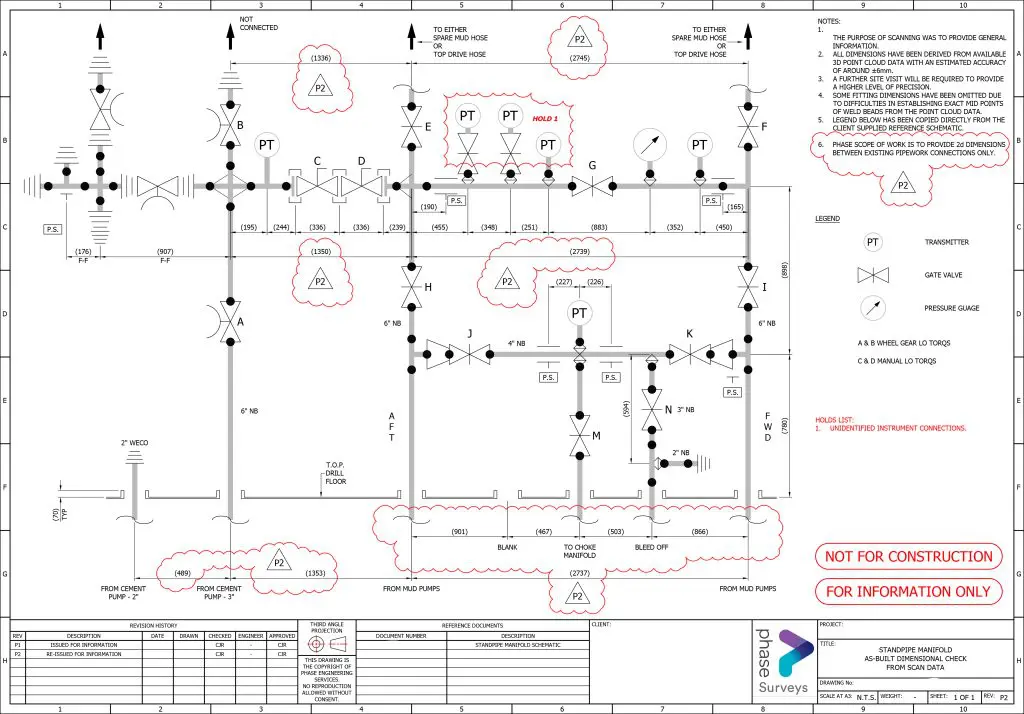
On return to office, AutoCAD drawings are updated to reflect verified physical conditions and revised to as-built standard. Phase works with both intelligent P&ID drawings — where attributes are linked to drawing objects and can be exported directly to SAP — and standard static P&ID drawings. Colour-coded markup is applied throughout, making the status of every item immediately clear to anyone using the drawings.
Following the initial linewalk, Phase supports ongoing record maintenance — receiving red-line mark-up sketches from the client following modifications and new installations, updating drawings accordingly, and returning to site to verify that tags have been correctly fitted and that drawings accurately reflect physical plant. The result is a living as-built record that stays current between shutdowns rather than drifting from reality over time.
Drawings Collected & Reviewed
Existing P&ID drawings reviewed ahead of site visit. Areas of known change or concern identified. Survey programme agreed with client.
Site Linewalk Carried Out
Phase surveyors walk the plant line by line — checking every pipe, valve, instrument, and fitting against the existing drawings. Discrepancies noted. Missing tags identified.
Tags Verified Against SAP
Missing and untagged assets cross-referenced against client SAP system. New installations without tags flagged. Older untagged equipment identified and reported.
Findings Documented
All discrepancies, missing tags, and undocumented modifications recorded and compiled into Excel schedules provided to the client for action.
As-Built Drawings Produced
AutoCAD drawings updated to reflect verified physical conditions. Revised to as-built standard. Colour-coded markup applied throughout. Intelligent drawing attributes updated for SAP export where required.
Verified Records Delivered
Drawings issued to client — verified, updated, and ready for use in shutdown planning, ongoing maintenance, and regulatory compliance.
Red-Line Mark-Ups Received
Following modifications or new installations, client engineers provide red-line mark-up sketches showing what changed. Phase updates the AutoCAD drawings to reflect the modifications.
Return Visit — Tags & Drawings Verified
Phase returns to site to confirm that tags have been correctly fitted to new or modified assets and that the updated drawings accurately reflect physical plant. Drawings reissued as verified as-built.
Related Work
Our Experience
The programme in numbers
Facilities Verified
24
Process Plant Sites
Typical Site Duration
1-3
Weeks
Drawing Standard
As-Built
Every Site
Why It Mattered
Drawings that don’t reflect physical reality are a source of risk at every stage of a facility’s operation — maintenance, shutdown planning, regulatory compliance, and future modification. Phase established the verified as-built record that removed that risk — across 24 facilities, to a consistent standard, using people who understand both survey methodology and process plant.
By supporting ongoing record maintenance, Phase ensures the drawings stay current — so the next shutdown is planned from drawings that reflect what actually exists, not what existed at the last verification.
Shutdown Planning Depends On This
A shutdown is planned from the drawings. Every isolation, every task, every sequence depends on the drawing reflecting what is actually there. When a shutdown is planned from drawings that don’t reflect physical reality, the conflicts surface during the shutdown — when the cost of resolution is at its highest. P&ID verification before shutdown planning is not a nice-to-have. It is the foundation the shutdown is built on.
Phase’s ongoing involvement — receiving red-line mark-ups, updating drawings, and returning to verify changes — means the drawings are never more than one verified visit away from reflecting physical reality. That’s the standard shutdown planning deserves.
Beyond Process Plant
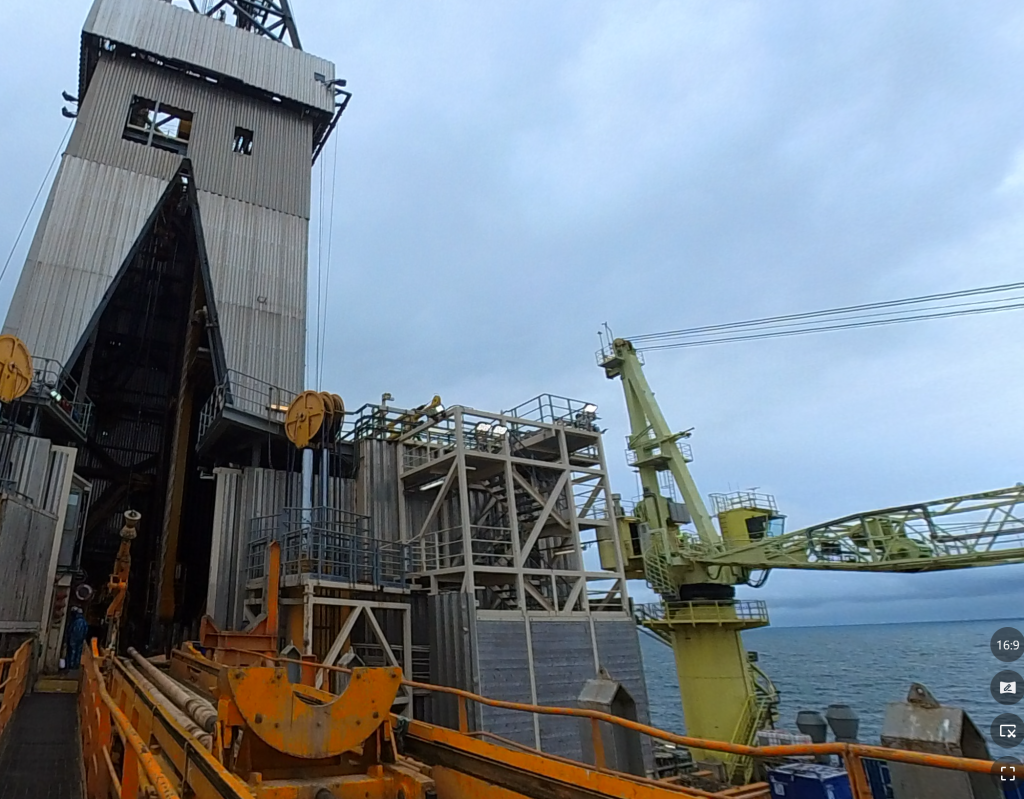
The requirement for verified P&IDs is not unique to the beverage industry. Offshore platforms, onshore oil and gas facilities, chemical plant, and any process environment where drawings are the basis for maintenance, modification, and shutdown decisions carries the same risk when records drift from physical reality. Phase applies the same linewalk methodology and as-built verification standard across all process plant environments.
The Result
Twenty-four process plant facilities. Verified as-built drawings. Missing tags identified and reported. SAP cross-referenced. Ongoing record management in place. Drawings ready for shutdown planning, maintenance, and regulatory compliance — reflecting what actually exists, not what was last recorded.
P&IDs that haven't been verified against physical plant recently?
If drawings need to reflect physical reality — for shutdown planning, ongoing maintenance, or regulatory compliance — a short conversation is often enough to establish whether Phase can help.